Following up from last nights review of Enron by Lucy Prebble, here is that exciting news I was telling you about! My article at For Books Sake.
Showing posts with label Contemporary. Show all posts
Showing posts with label Contemporary. Show all posts
Tuesday, 19 November 2013

Tuesday, 5 November 2013
Bookshelf Organisation.

Friday, 27 September 2013
The Wasp Factory by Iain Banks - Review

The novel follows an *cough* eccentric period in the eccentric life of Frank as he methodically grooms and cultivates the island that is his home. In the process we discover some of Frank's achievements and are given an in-depth view of Frank's mind. It's a journey, pack a cheese sandwich and an apple in that backpack and be prepared to ramble the dunes. The blurb gives away that Frank has killed three people, children, two cousins and his brother, two boys and one girl, and these murders dropped from a great height *still a bit raw!* fall into the lap of reader and force you to accept them and move on, or you'll miss them. Murder mingles with animal abuse and the border line of sanity and insanity are amongst the side lines. The relationship of a secluded family with a history of macabre, and how these twisted jigsaw pieces fit together is the true plot of this novel.
The imagery contained in Banks novel is beautiful, set on the north-east coast of Scotland and allows for a connection between plot and nature that accentuates and isolates all characters in the novel. The glory of nature is juxtaposition against the mechanical thinking and construction that Frank takes out on the island itself. Turning beautiful rolling sand dunes into dams, or erecting poles high in the sky that will break up the horizon line and a step further adorning them with the dried heads of gulls and mice, or the occasional cat. There is a real fight in this novel between nature and human intervention, which leads subtly to the end of the novel.
Tuesday, 24 September 2013
Three Birds by Janice Okoh - Review
The play follows three siblings, Tianna, Tionne and Tanika as they play house in the absence of their mother. The eldest Tianna has to deal with growing up and becoming the head of the household whilst Tionne is dealing with it all in his own way through mysterious and disturbing experiments, meanwhile Tanika, the youngest, is trying her best to understand and keep hold of childhood.
This play comes from Janice Okoh and is the product of 2011's Bruntwood Prize for playwriting.It was performed at The Royal Exchange in Manchester this year and has then went on to London's Bush Theatre.
Unfortunately I didn't get to see the play performed, but I have read the script after a few recommendations.
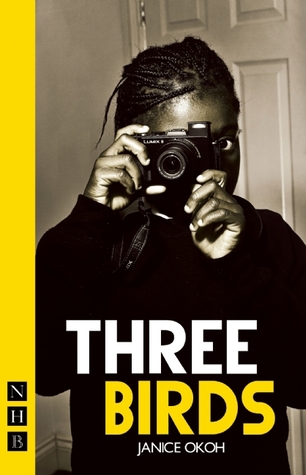
The script itself is brilliant, and refreshing. I tend to be attracted to the dark imagery of the macabre and this script, set along side a familiar home setting is a perfect juxtaposition. The situation the children find them in
escalates to unbelievable proportions, and Okoh has shown her talent by making it believable. Each character functions on their own in the play and as part of the cast and the detail of the play. This play works well with the cogs of theatre by enticing the audience / reader into itself and enveloping them thoroughly into it's world.Of particular note is the reveal at the end, which makes you want to re-read the play to look for clue's to the ending. The imagery builds upon itself to prepare the audience for the ending in a way here you half expect it, but being confronted with the macabre and bizarre is still disjointing. The layering of the script is particularly interesting, especially the small tear in these layers, as seen with the introduction of Mr. Mistoffelees the hand puppet. The true childish nature of these characters can be missed as they present themselves, particularly Tianna, as grown-up's but in these slips the reality of their ages and their circumstance is very daunting.
A word on the Bruntwood: this is obviously the quality of work that is being submitted to the prize and The Royal Exchange the product of quality to give something extra to these scripts. It is definitely a prize that carries a reputation for the winner and brings in new imagination to the theatre itself.
Subscribe to:
Posts (Atom)